
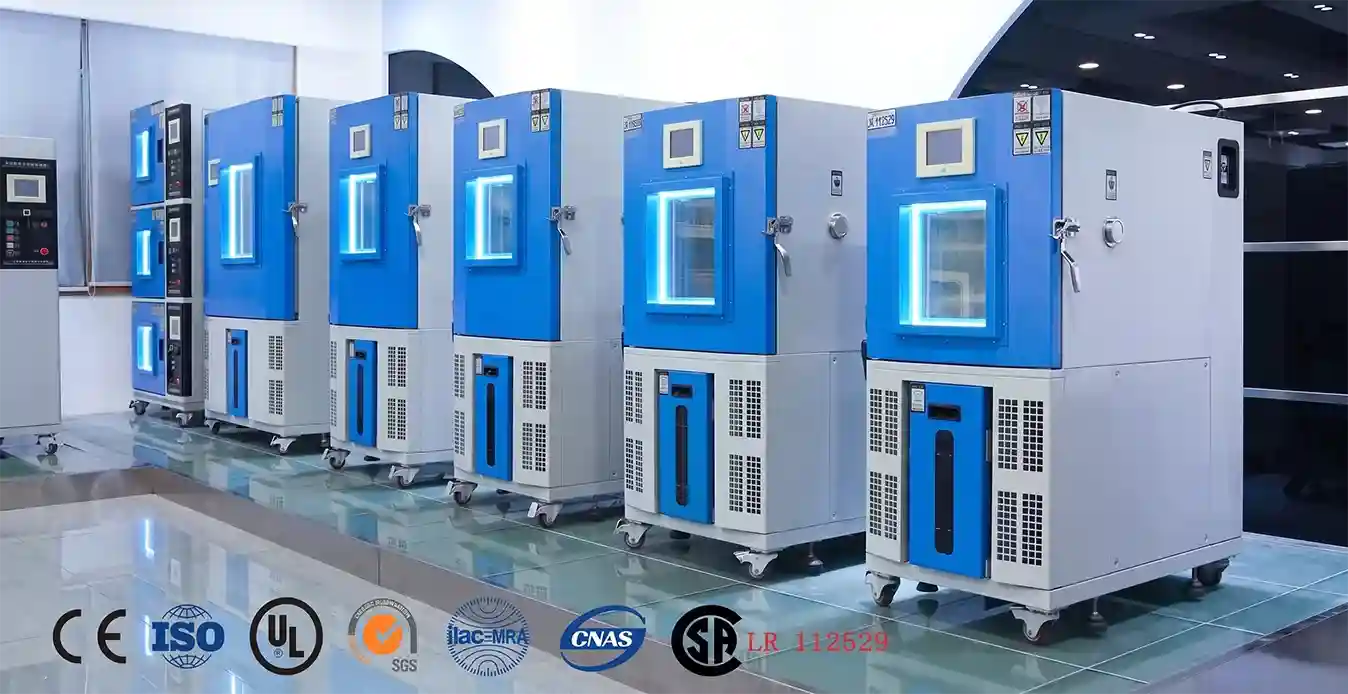
What is the ozone test chamber price ? Request the ozone chamber for sale ? What is ozone test ? If you are a fresh engineer for ozone exposure test work, There has several ozone test method and ozone resistance test standard for your reference. Ozone test chamber is a major factor in rubber cracking although it is rare in the atmosphere, ozone aging tank simulates and enhance the condition of ozone in the atmosphere to study the effects of ozone on rubber, and then identify and evaluate the method to resist ozone and aging for rubber, adopt effective anti-aging measures to enhance the life of rubber products.
Ozone testing lab need the ozone test chamber do chemical test for ozone, ozone resistance test for rubber, So the commercial ozone generator is necessary for ozone exposure testing. How long to run ozone machine ? Ozone generator damage rubber ? Does ozone damage electronics ? Below are some answers which comply with these technical questions. If you need to know more about Wewon Environmental Chambers Co., Ltd. Here is a video which can help you. Hope you will enjoy it.
The ozone aging test is a crucial method employed to assess the durability of materials when exposed to ozone. This test involves subjecting the sample to a controlled environment with constant ozone concentration, Temperature, and humidity levels. Typically, The sample is placed within a sealed chamber devoid of light, Ensuring consistent testing conditions. Over time, The sample is evaluated to determine changes in performance, Such as the degree of cracking or other measurable alterations.
Advanced Ozone & Environmental Testing Solutions
Explore our comprehensive range of high-precision ozone test chambers and environmental testing equipment, engineered for reliable material degradation and resistance analysis.
Ozone aging tests encompass both static and dynamic tensile assessments, Providing comprehensive insights into material behavior under prolonged exposure to ozone. Key parameters, Including ozone concentration, temperature, humidity, and sample tensile ratio, Play pivotal roles in influencing the outcomes of these tests. Understanding and optimizing these parameters are essential for accurate assessment and prediction of material resistance to ozone degradation.
Expanding on this, it’s crucial to highlight the significance of each parameter in the ozone aging test. Ozone concentration directly impacts the rate of degradation, With higher concentrations accelerating the process. Temperature and humidity levels within the test environment can influence chemical reactions and material properties, Thereby affecting aging behavior. Additionally, The sample’s tensile ratio, Representing its stretching capacity, is a critical factor in evaluating mechanical performance during and after exposure to ozone.

| Equipmnt Model | TH-OZ-080 | TH-OZ-150 | TH-OZ-225 | TH-OZ-408 |
| Test Volume | 80 Liters | 150 Liters | 225 Liters | 408 Liters |
| Testing Area(W*H*D) | 400*500*400 | 500*600*500 | 500*750*600 | 600*850*800 |
| Ozone Concentration | 0-2000 pphm | 0-2000 pphm | 0-2500 pphm | 0-300 ppm |
| Temperature Range | RT~65℃ | +10℃ +65℃ | RT~65℃ | +10℃ +70℃ |
| Temp Uniformity | ±2.0 ℃ | ±2.0 ℃ | ±2.0 ℃ | ±2.0 ℃ |
| Humidity Range: | 20%-65% | 20%-70% | 20%-65% | 20%-70% |
| Fluctuation Tolerance | ±0.5 ℃/ | ±2.0% RH | ±0.5 ℃/ | ±2.0% RH |
| Swing Speed | 1-30 Times | 1-30 Times | 1-30 Times | 1-35 Times |
| Airflow Velocity | 12-16mm/s | 600mm/s | 12-16mm/s | 600mm/s |
| Test Air Volume | 20-70L/min | 20-70L/min | 20-70L/min | 20-70L/min |
| Control System | TEMI 880 | TEMI 1500 | OYO (JAPAN) | OPTIONAL |
| Noise Level (dB) | 50 dB | 55 dB | 55 dB | 60 dB |
| Power Supply | 220V, 230V ±10% | 50Hz, 60Hz | 380V, 230V ±10% | 50Hz, 60Hz |
| Gross Weight (KG) | 185 KGS | 225 KGS | 285 KGS | 450 KGS |
Ozone resistance is an important factor to consider, as exposure to ozone can cause significant damage to plastic and rubber materials over time. a CE certificated ozone test chamber is a valuable asset for plastic and rubber product testing. This is why CE-certified ozone test chambers are commonly used to simulate and accelerate the effects of ozone exposure on plastic and rubber products. Here are some key features to look for in a CE-certified plastic rubber ozone test chamber:
| ● | Standard Compliance: A good ozone test chamber must comply with various international testing standards such as ASTM, ISO, and IEC. This ensures that the test chamber is reliable and provides consistent and accurate test results. |
| ● | Temperature and Humidity Control: The test chamber must have precise temperature and humidity controls to simulate different environmental conditions and ensure accurate testing. This is important as temperature and humidity can greatly affect the speed and severity of ozone degradation. |
| ● | Ozone Control: The test chamber should have accurate ozone controls to generate a consistent and reproducible ozone concentration. The ozone concentration can be adjusted as per the required test conditions and duration. |
| ● | Sample Holders: The test chamber should have various sample holders with different sizes to accommodate different shapes and sizes of specimens for testing. The sample holders must also be designed in a way that minimizes any kind of interference or contamination during testing. |
| ● | Safety Features: The test chamber should have safety features such as automatic shut-off, over-temperature protection, and over-pressure protection. This is important to prevent any kind of accidents or damage to the test chamber or specimen during testing. |
| ● | Data Acquisition System: The test chamber should have a data acquisition system that can store and record test data for further analysis. This helps in generating test reports and identifying any kind of trends or changes in the test results. |


| Test Standard | Description of Various Types Ozone Aging Test for Your Specimens |
|---|---|
| ASTM D3041-79 | Method of Testing Coated Fabrics – Ozone Checking in a Chamber. |
| ASTM 1149 | Method for Rubber Deterioration – Cracking in an Ozone Controlled Environment. |
| ASTM D1171-18 | Standard Test Method for Rubber Deterioration – Surface Ozone Cracking Outdoors |
| IEC 60811 -403 | Electric And Optical Fibre Cables – Test Methods For Non-Metallic Materials – Part 403: Miscellaneous Tests – Ozone Resistance Test On Cross – Linked Compounds |
| ISO1431-1 | Rubber Vulcanized or thermoplastic – Resistance to Ozone Cracking. |
| ISO1431-3 | Rubber Vulcanized or thermoplastic – Resistance to Ozone Cracking. |
Furthermore, Advancements in testing methodologies, such as dynamic tensile testing, Offer deeper insights into material behavior under dynamic loading conditions. Unlike static tests, Dynamic assessments simulate more realistic operational conditions, providing a comprehensive understanding of material performance over time. By incorporating dynamic testing into ozone aging protocols, Engineers can better predict material behavior in dynamic environments, Such as automotive components subjected to constant flexing and stretching.
This holistic approach to testing enables the development of robust materials capable of withstanding the rigors of prolonged ozone exposure, Thereby extending product lifespan and reducing maintenance costs. The ozone aging test serves as a vital tool in assessing the durability and longevity of materials in ozone-rich environments. By understanding and optimizing key parameters, Such as ozone concentration, temperature, humidity, and tensile ratio, Researchers and manufacturers can develop materials with enhanced resistance to ozone degradation.
Moreover, Integrating dynamic testing methodologies provides comprehensive insights into material behavior under real-world conditions, Further enhancing product reliability and performance. As industries continue to prioritize sustainability and longevity, The ozone aging test remains instrumental in ensuring the quality and reliability of materials across various applications. By meticulously controlling these parameters, Manufacturers and researchers can fine-tune testing conditions to simulate real-world scenarios more accurately. This precision enables them to develop materials with enhanced ozone resistance, Ensuring durability and longevity in various applications.

